
 Botanical
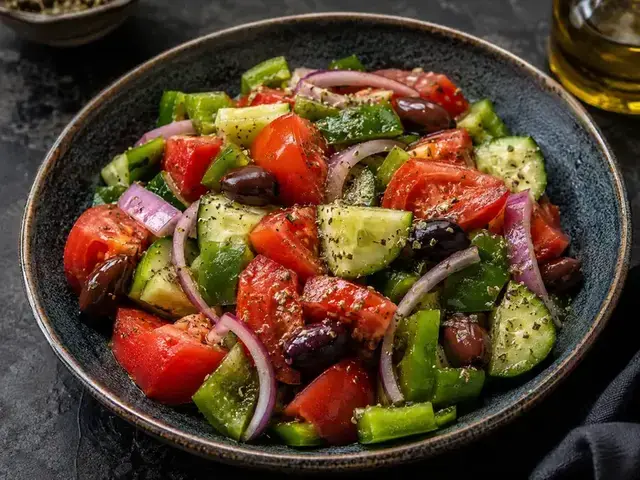
Vegan Greek Village Salad
This vegan village-style salad brings together ripe tomatoes, cucumber, green pepper, onion and olives with oregano dressing. Optional vegan feta adds a salty accent.…
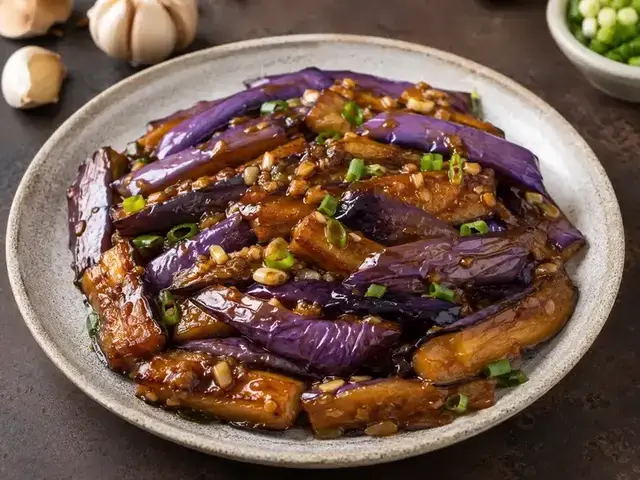
Aubergine in garlic sauce should have a soft, almost creamy centre beneath a glossy savoury-sour coating. Garlic and ginger provide the main aroma, while a small chilli addition gives warmth. The aubergine must be fully tender before the sauce is considered finished.
Follow the measured ingredients, numbered method, substitutions, safety notes and cooking mode below.
Cut aubergine into even batons and measure the oil because the flesh absorbs it readily. Mix the cornflour slurry with cold water. Soy sauce supplies salt, so taste before adding any seasoning beyond the formulation.
Cook the aubergine until a piece compresses easily, using the staged liquid and heat control in the method. Add aromatics without scorching, then coat with sauce and thicken briefly. Fold gently to preserve the baton shape.
A browned outside with a spongy centre means the aubergine needs more cooking. Greasiness can result from repeatedly adding oil to a crowded pan. A gluey sauce needs a small amount of water and less reduction.
Aubergine in garlic sauce should have a soft, almost creamy centre beneath a glossy savoury-sour coating. Garlic and ginger provide the main aroma, while a small chilli addition gives warmth. The aubergine must be fully tender before the sauce is considered finished.
1. Read firstRead every step once before switching on the cooker.
2. MeasureWeigh and prepare all ingredients in the order listed.
3. Control heatLow means a gentle bubble, medium cooks steadily, and high is for quick browning.
4. Check donenessUse the texture, timing and safe-temperature checks written in the method.
Complete one numbered step before moving to the next. Keep the heat and timing exactly as written.
Aubergine must be tender before it is sauced. Firm, spongy pieces need more oven time, not just a thicker sauce.
Ingredient choices: Cut aubergine into even batons and measure the oil because the flesh absorbs it readily. Mix the cornflour slurry with cold water. Soy sauce supplies salt, so taste before adding any seasoning beyond the formulation.
Cooking control: Cook the aubergine until a piece compresses easily, using the staged liquid and heat control in the method. Add aromatics without scorching, then coat with sauce and thicken briefly. Fold gently to preserve the baton shape.
If something goes wrong: A browned outside with a spongy centre means the aubergine needs more cooking. Greasiness can result from repeatedly adding oil to a crowded pan. A gluey sauce needs a small amount of water and less reduction.
Wash produce and use clean utensils. Keep perishable ingredients refrigerated. Refrigerate cooked food in shallow containers within 2 hours, or within 1 hour when the surroundings exceed 32°C.
Serve with rice and finish with spring onion. Spoon sauce over the aubergine lightly so the soft pieces remain visible.
Refrigerate promptly in shallow covered containers at 4°C or below and use within 3 days. Reheat only the portion needed to at least 74°C throughout. Discard food left unrefrigerated for more than 2 hours, or 1 hour above 32°C.
Botanical
This vegan village-style salad brings together ripe tomatoes, cucumber, green pepper, onion and olives with oregano dressing. Optional vegan feta adds a salty accent.…
 Botanical
Aloo tama with black-eyed peas combines potato, fully cooked fermented bamboo shoots and tender beans in a tangy Nepali-style broth. Fermented bamboo gives the…
 Botanical
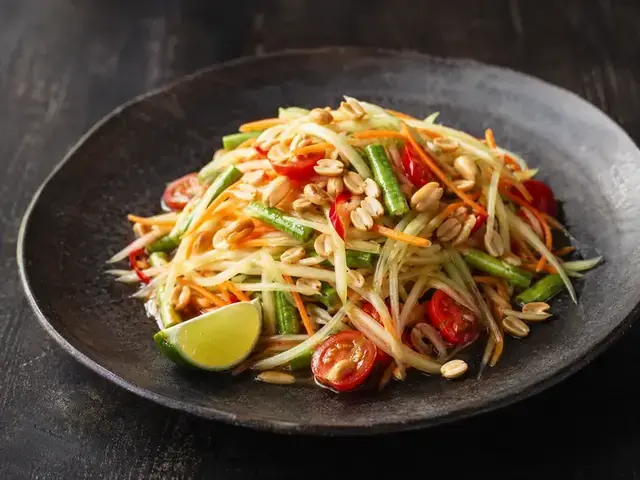
Shredded green papaya, beans, tomatoes, peanuts and a lime-chilli dressing create a crisp vegan Thai salad with sweet, sour, salty and spicy balance.
No reviews yet. Be the first to rate this recipe.