
 Lamb
Lamb
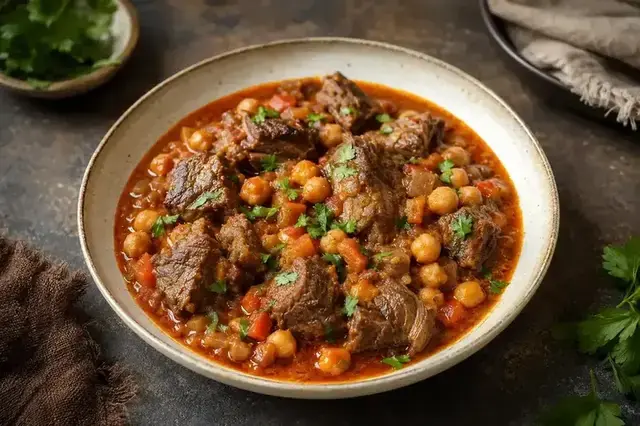
Lamb and Chickpea Stew
Lamb and chickpea stew combines tender shoulder, carrots and cooked chickpeas in a tomato-spiced broth. Chickpeas add a creamy bite and absorb some of…
Lamb biryani layers tender shoulder masala with fragrant, separate basmati grains. Mint, coriander and whole spices perfume the covered pot. The meat is braised before the final rice stage because shoulder and rice need very different cooking times.

Follow the measured ingredients, numbered method, substitutions, safety notes and cooking mode below.
Use basmati and similarly sized lamb cubes. Yogurt, tomatoes and braising water all affect the moisture left under the rice. Keep the finishing water measured rather than adding it automatically to an already wet masala.
Cook the lamb until tender, then reduce excess gravy before layering the partly cooked rice. Spread the grains gently without compression. Steam covered and let the finished pot settle before lifting portions with a broad spoon.
Firm lamb should be corrected before rice is added. Mushy rice usually reflects excessive parboiling or too much remaining gravy. Hard upper grains may need a small measured splash of hot water and further covered cooking.
Lamb biryani layers tender shoulder masala with fragrant, separate basmati grains. Mint, coriander and whole spices perfume the covered pot. The meat is braised before the final rice stage because shoulder and rice need very different cooking times.
1. Read firstRead every step once before switching on the cooker.
2. MeasureWeigh and prepare all ingredients in the order listed.
3. Control heatLow means a gentle bubble, medium cooks steadily, and high is for quick browning.
4. Check donenessUse the texture, timing and safe-temperature checks written in the method.
Complete one numbered step before moving to the next. Keep the heat and timing exactly as written.
The lamb gravy should be concentrated before layering. Do not stir the rice into the sauce before the final covered cook.
Ingredient choices: Use basmati and similarly sized lamb cubes. Yogurt, tomatoes and braising water all affect the moisture left under the rice. Keep the finishing water measured rather than adding it automatically to an already wet masala.
Cooking control: Cook the lamb until tender, then reduce excess gravy before layering the partly cooked rice. Spread the grains gently without compression. Steam covered and let the finished pot settle before lifting portions with a broad spoon.
If something goes wrong: Firm lamb should be corrected before rice is added. Mushy rice usually reflects excessive parboiling or too much remaining gravy. Hard upper grains may need a small measured splash of hot water and further covered cooking.
For intact lamb chops and roasts, reach at least 63°C and rest for 3 minutes. Shoulder and other braising cuts need longer to become tender. Use separate raw-meat utensils.
Serve portions that include both rice and lamb rather than scraping only the top layer. Follow the recipe’s rice-specific cooling and reheating instructions for leftovers.
Cool cooked rice quickly in shallow portions, ideally refrigerating within 1 hour. Keep at 4°C or below and use within 24 hours. Reheat only once to at least 74°C throughout. Do not keep a batch already reheated for another reheating cycle.
Lamb
Lamb and chickpea stew combines tender shoulder, carrots and cooked chickpeas in a tomato-spiced broth. Chickpeas add a creamy bite and absorb some of…
 Lamb
Lamb
Slow-roasted lamb shoulder is designed to become soft enough to pull into substantial pieces. Rosemary, thyme, garlic and onion flavour the cooking juices. The…
 Lamb
Lamb
Lamb moussaka layers roasted aubergine with a cinnamon-scented meat sauce and a creamy béchamel topping. The aubergine should be fully tender, while the filling…
No reviews yet. Be the first to rate this recipe.