 Lamb
Lamb
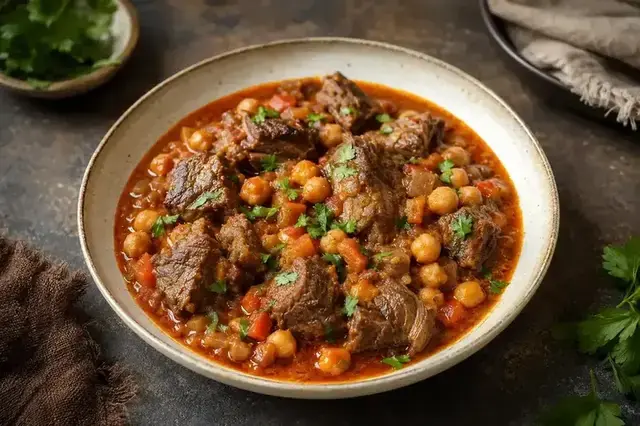
Lamb and Chickpea Stew
Lamb and chickpea stew combines tender shoulder, carrots and cooked chickpeas in a tomato-spiced broth. Chickpeas add a creamy bite and absorb some of…
Slow-roasted lamb shoulder is designed to become soft enough to pull into substantial pieces. Rosemary, thyme, garlic and onion flavour the cooking juices. The covered roasting stage retains moisture, while the final uncovered stage develops colour.

Follow the measured ingredients, numbered method, substitutions, safety notes and cooking mode below.
The formulation assumes a shoulder around 2 kg; thickness and bone structure affect the time. Use a deep roasting dish and enough liquid to protect the base without submerging the entire joint. Wine is a flavouring choice, not a guarantee of an alcohol-free result.
Keep the shoulder covered during the tenderising stage and check the liquid level periodically. After safe temperature is reached, continue until a fork enters and turns easily. Rest the meat while excess fat is removed from the pan juices.
A safely cooked but firm shoulder needs more gentle cooking for tenderness. A dry pan needs a small addition of hot stock or water before scorching occurs. If the juices are salty, dilute before reducing further.
Slow-roasted lamb shoulder is designed to become soft enough to pull into substantial pieces. Rosemary, thyme, garlic and onion flavour the cooking juices. The covered roasting stage retains moisture, while the final uncovered stage develops colour.
1. Read firstRead every step once before switching on the cooker.
2. MeasureWeigh and prepare all ingredients in the order listed.
3. Control heatLow means a gentle bubble, medium cooks steadily, and high is for quick browning.
4. Check donenessUse the texture, timing and safe-temperature checks written in the method.
Complete one numbered step before moving to the next. Keep the heat and timing exactly as written.
Tenderness, not the clock, is the final test; the shoulder blade should move easily before the high-heat finish.
Ingredient choices: The formulation assumes a shoulder around 2 kg; thickness and bone structure affect the time. Use a deep roasting dish and enough liquid to protect the base without submerging the entire joint. Wine is a flavouring choice, not a guarantee of an alcohol-free result.
Cooking control: Keep the shoulder covered during the tenderising stage and check the liquid level periodically. After safe temperature is reached, continue until a fork enters and turns easily. Rest the meat while excess fat is removed from the pan juices.
If something goes wrong: A safely cooked but firm shoulder needs more gentle cooking for tenderness. A dry pan needs a small addition of hot stock or water before scorching occurs. If the juices are salty, dilute before reducing further.
For intact lamb chops and roasts, reach at least 63°C and rest for 3 minutes. Shoulder and other braising cuts need longer to become tender. Use separate raw-meat utensils.
Pull or carve into generous pieces and serve with strained, tasted juices. Plan potatoes or vegetables separately because they are not included in this ingredient list.
Refrigerate promptly in shallow covered containers at 4°C or below and use within 3 days. Reheat only the portion needed to at least 74°C throughout. Discard food left unrefrigerated for more than 2 hours, or 1 hour above 32°C.
Lamb
Lamb and chickpea stew combines tender shoulder, carrots and cooked chickpeas in a tomato-spiced broth. Chickpeas add a creamy bite and absorb some of…
 Lamb
Lamb
Lamb biryani layers tender shoulder masala with fragrant, separate basmati grains. Mint, coriander and whole spices perfume the covered pot. The meat is braised…
 Lamb
Lamb
Lamb moussaka layers roasted aubergine with a cinnamon-scented meat sauce and a creamy béchamel topping. The aubergine should be fully tender, while the filling…
No reviews yet. Be the first to rate this recipe.