Cuisine: Middle EasternPrep: 20 MinCook: 15 MinTotal: 35 Min active (plus overnight soaking and 20–30 Min resting)Difficulty: MediumServings: 4 servings
v1.0◎ Origin: Falafel is a well-known Middle Eastern dish made primarily from legumes, herbs, aromatics, and spices. Its exact origin is debated, with Egypt and the Levant both having strong historical culinary traditions surrounding falafel. This plate draws inspiration from the broader Middle Eastern and Eastern Mediterranean mezze tradition, combining falafel with hummus, fresh vegetables, grains, herbs, and lemon.
Follow the measured ingredients, numbered method, substitutions, safety notes and cooking mode below.
Professional Kitchen View
Standard Yield4 servings
Mise en Place / Production Schedule
Soak chickpeas overnight.
Drain and thoroughly dry the chickpeas.
Prepare and season the falafel mixture.
Refrigerate the mixture.
Prepare hummus and hold chilled.
Wash and cut all vegetables.
Cook and portion bulgur or quinoa.
Prepare the lemon herb dressing.
Portion and shape falafel.
Cook falafel to order.
Assemble plates immediately before service.
Garnish and serve.
Professional Chef Notes
For consistent professional service, portion falafel by weight before cooking. Keep the mixture refrigerated during production and avoid excessive handling.
Prepare the dressing ahead of service, but add delicate fresh herbs close to service for maximum freshness and aroma.
For high-volume operations, falafel can be shaped in advance and stored covered under refrigeration before cooking. Maintain consistent portion sizes and plating specifications throughout service.
About This Recipe
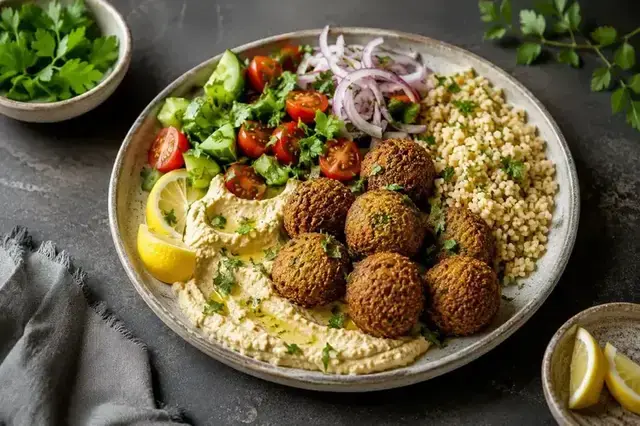
This falafel plate combines herb-rich chickpea patties with hummus, fresh vegetables and a lemon-herb dressing. The patties should have a lightly crisp surface and a cooked, tender centre with visible green flecks. The salad and dressing provide relief from the chickpeas and tahini-rich hummus.
Before You Start
1. Read firstRead every step once before switching on the cooker.
2. MeasureWeigh and prepare all ingredients in the order listed.
3. Control heatLow means a gentle bubble, medium cooks steadily, and high is for quick browning.
4. Check donenessUse the texture, timing and safe-temperature checks written in the method.
Equipment
✓ Food processor
✓ Mixing bowl
✓ Chef's knife
✓ Cutting board
✓ Measuring spoons
✓ Measuring jug
✓ Non-stick frying pan
✓ Spatula
✓ Serving plates
Ingredients
For the Falafel
For the Lemon Herb Dressing
For the Plate
Easy Step-by-Step Method
Complete one numbered step before moving to the next. Keep the heat and timing exactly as written.
**Prepare the Falafel Mixture:** Drain the soaked chickpeas very well. Add chickpeas, onion, garlic, parsley, coriander, cumin, coriander powder, paprika, baking soda, lemon juice, salt and black pepper to a food processor. Pulse until you have a coarse, slightly grainy mixture. Do not blend into a smooth paste.
**Rest the Mixture:** Transfer the mixture to a bowl and mix in the chickpea flour. Cover and refrigerate for 20–30 minutes. This helps the falafel hold its shape.
**Shape the Falafel:** Form the mixture into small balls or slightly flattened patties. Keep them evenly sized so they cook at the same rate.
**Cook the Falafel:** Heat a little olive oil in a frying pan over medium heat. Cook the falafel for approximately 3–4 minutes per side until golden brown and crisp on the outside. Avoid overcrowding the pan.
**Make the Lemon Herb Dressing:** Whisk together olive oil, lemon juice, lemon zest, parsley, coriander, garlic and oregano. Season with salt and black pepper.
**Build the Plate:** Spread hummus across each serving plate. Add the cooked bulgur or quinoa, salad leaves, cucumber, tomatoes and red onion.
**Add the Falafel:** Place 4–5 warm falafel pieces on each plate. Drizzle generously with the lemon herb dressing.
**Garnish and Serve:** Finish with toasted sesame seeds, fresh herbs and lemon wedges. Serve immediately while the falafel are warm and crispy.
Chef Notes & Tips
Use dried chickpeas rather than canned chickpeas for the best falafel texture.
Do not boil the chickpeas before processing.
Drain the soaked chickpeas thoroughly to prevent a wet mixture.
Keep the mixture slightly coarse rather than turning it into a smooth paste.
Refrigerating the mixture before shaping helps improve its structure.
For extra crispiness, air-fry or oven-bake the falafel instead of pan-frying.
Add chilli flakes to the dressing for a spicy variation.
Ingredient choices: The falafel mixture uses soaked dried chickpeas, not canned chickpeas, which produce a much softer mixture. Drain soaked chickpeas thoroughly and keep the soak refrigerated. Chop the herbs with the chickpeas finely enough to bind while retaining some texture.
Cooking control: Shape one small test patty first. Cook it using the chosen method and open it to assess binding, seasoning and whether the centre is fully cooked before shaping the whole batch. Uniform, relatively thin patties cook more evenly than large thick ones with a dark exterior.
If something goes wrong: A mixture that falls apart may be too wet, too coarse or insufficiently rested. Correct the texture gradually with the stated chickpea flour instead of adding large amounts of flour. Browning outside is not evidence that a thick raw centre has cooked.
Ingredient Substitutions
↔ Dried chickpeas → use soaked dried chickpeas for this method; canned chickpeas are not a direct substitute and need a separately developed recipe. Fresh coriander → additional fresh parsley. Chickpea flour → oat flour (check gluten-free certification if needed). Bulgur → cooked quinoa. Hummus → white bean hummus. Cucumber → courgette ribbons. Fresh parsley → fresh mint. Olive oil → avocado oil.
Food Safety & Doneness
Keep soaked chickpeas refrigerated if soaking for an extended period.
Keep raw and ready-to-eat ingredients separated during preparation.
Wash fresh vegetables and herbs thoroughly before use.
Cook falafel until golden brown on the outside and thoroughly hot in the centre.
Keep hummus and prepared vegetables refrigerated until service.
Refrigerate leftovers promptly in clean, covered containers.
Serving & Plating
Spread hummus across a wide plate using the back of a spoon. Arrange the warm falafel over and around the hummus. Place the grains, salad leaves, cucumber, tomatoes, and red onion in distinct sections to create colour and contrast.
Finish with a generous drizzle of lemon herb dressing, toasted sesame seeds, fresh herbs, and a lemon wedge. Serve the falafel warm for the best texture.
Arrange warm falafel beside hummus and the cool vegetables, with dressing separate. Choose quinoa instead of bulgur only if a gluten-free variation is intended and all other ingredients are suitable.
Storage
Store cooked falafel in an airtight container in the refrigerator for up to 3–4 days.
Store hummus, salad, grains, and dressing separately for best quality.
Reheat falafel in an oven or air fryer to restore crispness.
Cooked falafel can be frozen for up to 2 months.
Thaw frozen falafel in the refrigerator before reheating.
Nutrition & Dietary Information
Carbohydrates: 61 g
Fat: 23 g
Allergens: Sesame: Hummus and sesame seeds
Gluten: Bulgur
Legumes: Chickpeas
Check commercially prepared hummus and other packaged ingredients for additional allergen declarations.
Approximate values per serving, based on 4 servings.
Calories: 520 kcal
Protein: 19 g
Carbohydrates: 61 g
Dietary Fiber: 15 g
Fat: 23 g
Saturated Fat: 3 g
Sugar: 8 g
Sodium: 620 mg
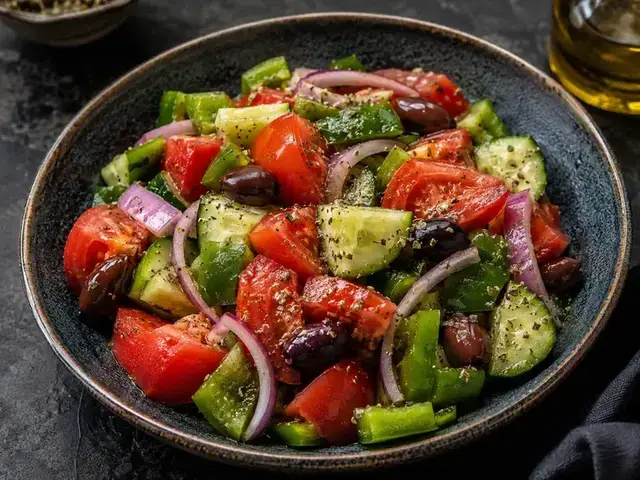
This vegan village-style salad brings together ripe tomatoes, cucumber, green pepper, onion and olives with oregano dressing. Optional vegan feta adds a salty accent.…

 Botanical