
 Botanical
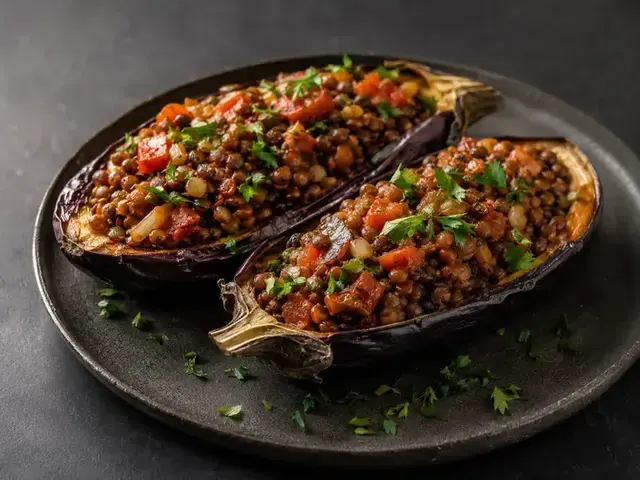
Stuffed Aubergine with Lentils
Lentil-stuffed aubergines combine a soft roasted shell with a tomato, cumin and paprika filling. Green lentils retain some bite against the tender aubergine. Lemon…
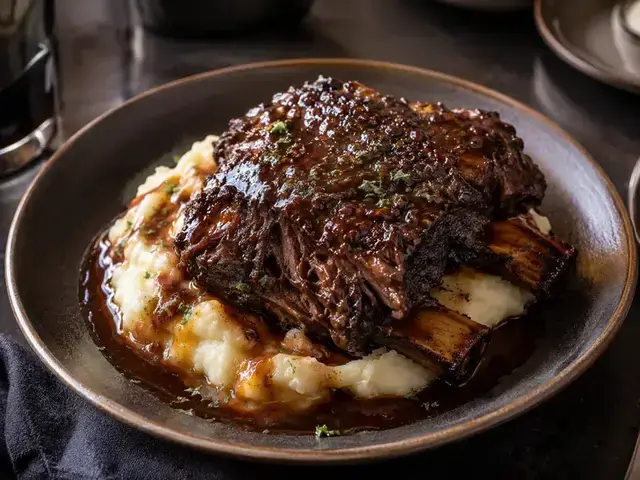
Slow-cooked short ribs develop tender meat and a gelatin-rich sauce through a long, moist braise. Onion, carrot, celery and red wine form the base. The ribs should yield readily while retaining enough structure to lift from the pot.
Follow the measured ingredients, numbered method, substitutions, safety notes and cooking mode below.
Bone-in ribs vary in thickness and meat coverage, so weight alone cannot guarantee identical cooking time. Brown their exposed meat surfaces. Use a braising vessel that fits the ribs without an unnecessarily shallow liquid layer.
Cook the aromatic base and reduce wine before adding stock and ribs. Maintain gentle covered cooking until the meat is tender. Remove excess surface fat from the sauce, then reduce and season after the solids are ready.
Tough ribs generally need more time, while dry exposed edges may need better coverage or a tighter lid. If sauce tastes greasy, remove fat rather than adding acid alone. A salty stock limits how far the jus can reduce.
Slow-cooked short ribs develop tender meat and a gelatin-rich sauce through a long, moist braise. Onion, carrot, celery and red wine form the base. The ribs should yield readily while retaining enough structure to lift from the pot.
1. Read firstRead every step once before switching on the cooker.
2. MeasureWeigh and prepare all ingredients in the order listed.
3. Control heatLow means a gentle bubble, medium cooks steadily, and high is for quick browning.
4. Check donenessUse the texture, timing and safe-temperature checks written in the method.
Complete one numbered step before moving to the next. Keep the heat and timing exactly as written.
Rib size and connective tissue affect the braise. The safe minimum temperature is not a tenderness target; continue gently until the meat yields to a fork.
Ingredient choices: Bone-in ribs vary in thickness and meat coverage, so weight alone cannot guarantee identical cooking time. Brown their exposed meat surfaces. Use a braising vessel that fits the ribs without an unnecessarily shallow liquid layer.
Cooking control: Cook the aromatic base and reduce wine before adding stock and ribs. Maintain gentle covered cooking until the meat is tender. Remove excess surface fat from the sauce, then reduce and season after the solids are ready.
If something goes wrong: Tough ribs generally need more time, while dry exposed edges may need better coverage or a tighter lid. If sauce tastes greasy, remove fat rather than adding acid alone. A salty stock limits how far the jus can reduce.
For intact beef steaks and roasts, reach at least 63°C and rest for 3 minutes. Braising cuts need longer for fork-tender texture. Keep raw-meat utensils away from cooked food.
Serve a rib portion with a moderate amount of sauce and a separately prepared soft accompaniment such as mash. Check for loose bones before plating.
Refrigerate promptly in shallow covered containers at 4°C or below and use within 3 days. Reheat only the portion needed to at least 74°C throughout. Discard food left unrefrigerated for more than 2 hours, or 1 hour above 32°C.
Botanical
Lentil-stuffed aubergines combine a soft roasted shell with a tomato, cumin and paprika filling. Green lentils retain some bite against the tender aubergine. Lemon…
 Botanical
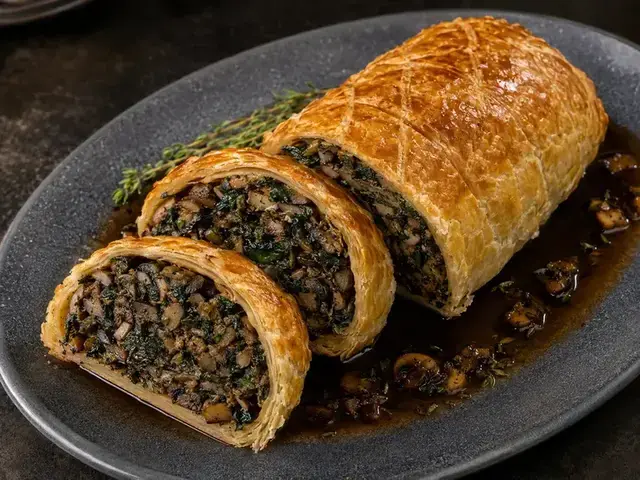
Vegan mushroom Wellington encloses a savoury mushroom-lentil filling in crisp puff pastry. The filling needs enough structure to slice without being a dry paste.…
 Botanical
Chickpea-spinach stuffed peppers combine a soft pepper shell with a tomato-seasoned rice and chickpea filling. The rice absorbs flavour while the chickpeas retain a…
No reviews yet. Be the first to rate this recipe.