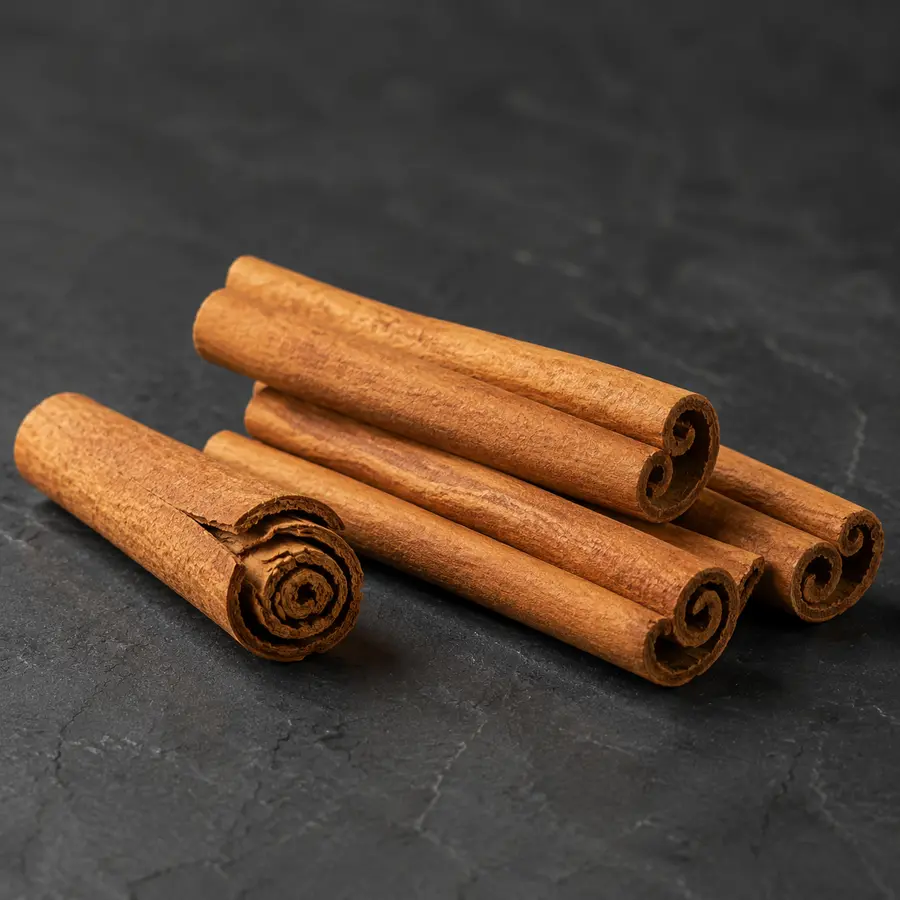
Ingredient at a glance: Cinnamon is dried tree bark sold mainly as Ceylon cinnamon or cassia; the two differ in structure, strength and coumarin content.
Flavour, Aroma and Texture
Ceylon cinnamon is delicate, floral and citrusy; cassia is darker, hotter and more forceful. Long infusion gives woodiness and tannin.
How to Select It
Buy clearly labelled origin or species when it matters. Sticks should smell sweet and warm; powder should be fresh, dry and free from clumps or mustiness.
Professional Preparation
Break sticks for infusions and remove before service. Add powder with dry ingredients in baking or bloom briefly in moist fat for savoury dishes.
Best Cooking Methods
- Infuse sticks in rice, tea, braises and compote.
- Use measured powder in cakes, porridge and spice blends.
- Toast a small piece gently with whole spices for curry.
Flavour Pairings
- Apple, pear, orange and banana.
- Cardamom, clove, ginger and nutmeg.
- Lamb, rice, lentils and tomato.
- Chocolate, coffee, honey and nuts.
Practical Substitutions
- Cassia for stronger heat when Ceylon is unavailable, using less.
- Allspice for warm clove-pepper notes.
- Cardamom plus nutmeg for sweet dishes without cinnamon.
Storage and Shelf Life
Store sticks and powder airtight, dry, dark and cool. Powder fades faster; date the container and avoid buying oversized packs.
Season and Availability
A year-round dried spice, with quality linked to species, harvest and storage.
Nutrition and Dietary Context
Normal seasoning amounts are small. Cassia can contain more coumarin than Ceylon cinnamon; people using large habitual amounts should follow authoritative health advice.
Allergen and Food-Safety Notes
Cinnamon allergy and contact irritation can occur. Inhaling dry powder is dangerous; never promote cinnamon-challenge behaviour.
Zero-Waste Use
Reuse a still-fragrant stick once in a compatible immediate infusion, then compost. Combine modest sound powder into baking blends before it fades.
Common Mistakes to Avoid
- Treating all cinnamon species as identical.
- Leaving sharp bark hidden in served rice or stew.
- Using spoonfuls of dry powder as a health practice.
Chef’s Quality Check
Cinnamon should smell warm immediately and integrate as sweetness-enhancing spice, not leave a dusty coating or harsh woody finish.
This profile provides general culinary education. Product composition, allergens, storage life and safety requirements vary; check the label and follow local guidance.