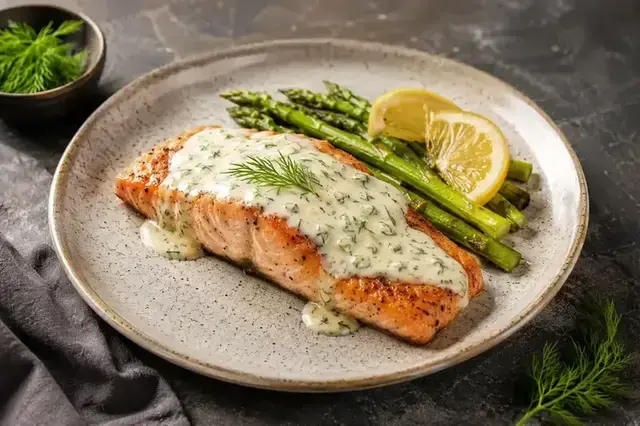
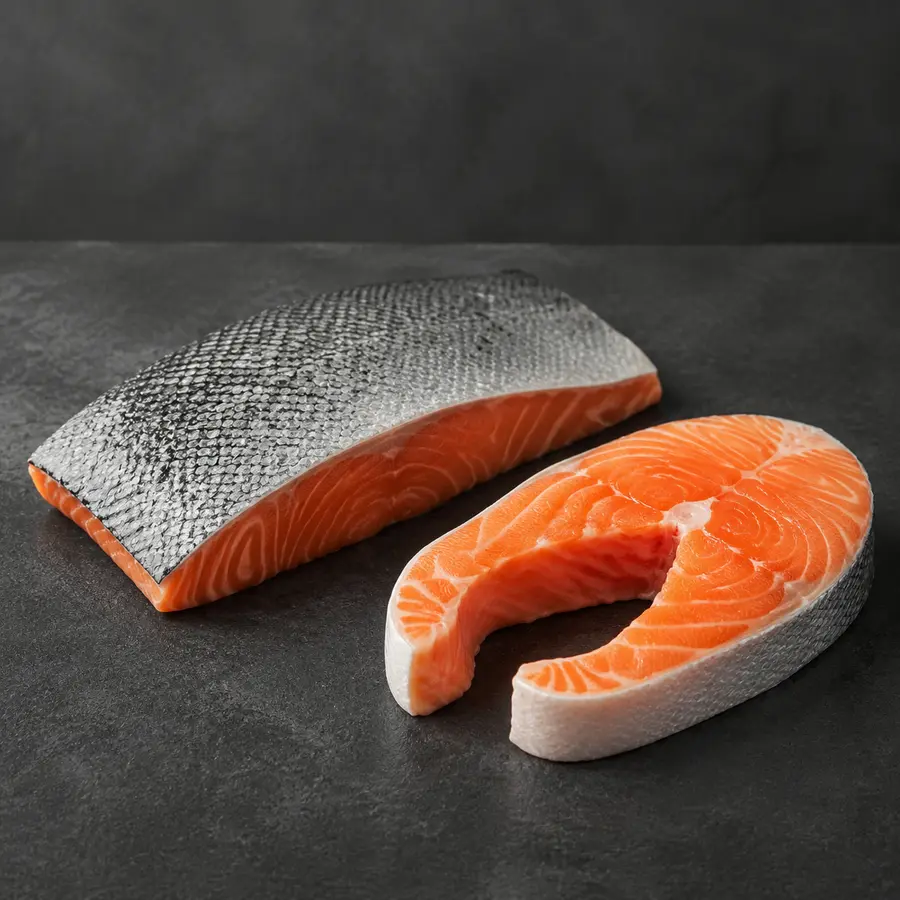
Ingredient at a glance: Salmon is an oily fish sold as fillets, steaks, sides, smoked products and canned fish; wild and farmed types differ in fat, colour and texture.
Flavour, Aroma and Texture
It is rich, savoury and buttery, with firm flakes. Overcooking pushes out white albumin and dries the flesh; rancidity produces fishy oil flavours.
How to Select It
Choose cold fish with resilient flesh, clean sea-like aroma and moist—not dried—cut surfaces. Packaging should be intact with no slime, gaping or sour smell.
Professional Preparation
Keep cold, remove pin bones with clean tweezers, scale skin when needed and pat dry. Portion evenly and keep raw fish tools away from ready-to-eat food.
Best Cooking Methods
- Pan-sear skin-side down for crisp skin, then finish gently.
- Roast a side at moderate heat and check the thickest section.
- Poach below a boil for delicate flakes.
Flavour Pairings
- Lemon, dill, caper and mustard.
- Soy, ginger, sesame and spring onion.
- Beetroot, potato, cucumber and fennel.
- Yogurt, horseradish, honey and black pepper.
Practical Substitutions
- Trout for similar oily tenderness.
- Arctic char for a finer salmon-like texture.
- Mackerel for stronger oil-rich flavour in robust dishes.
Storage and Shelf Life
Refrigerate at the coldest food-safe temperature and use promptly, preferably on ice in professional storage without meltwater contact. Freeze well wrapped. Cool cooked salmon rapidly.
Season and Availability
Availability and quality vary by fishery, farming cycle and region; consult responsible sourcing information.
Nutrition and Dietary Context
Salmon provides protein and long-chain omega-3 fats, with content varying by species and production.
Allergen and Food-Safety Notes
Fish is a major allergen. Raw or undercooked salmon can present parasite and pathogen risks; only use fish treated and handled for that purpose under local rules.
Zero-Waste Use
Use bones and clean trimmings for brief fish stock, crisp sound skin and turn safely chilled cooked flakes into fish cakes.
Common Mistakes to Avoid
- Cooking unequal portions together.
- Starting with wet skin and expecting crispness.
- Assuming ordinary frozen fish is automatically approved for raw service.
Chef’s Quality Check
Flesh should separate into moist defined flakes, smell clean and meet the chosen safe endpoint; skin should be dry and crisp when intended.
This profile provides general culinary education. Product composition, allergens, storage life and safety requirements vary; check the label and follow local guidance.