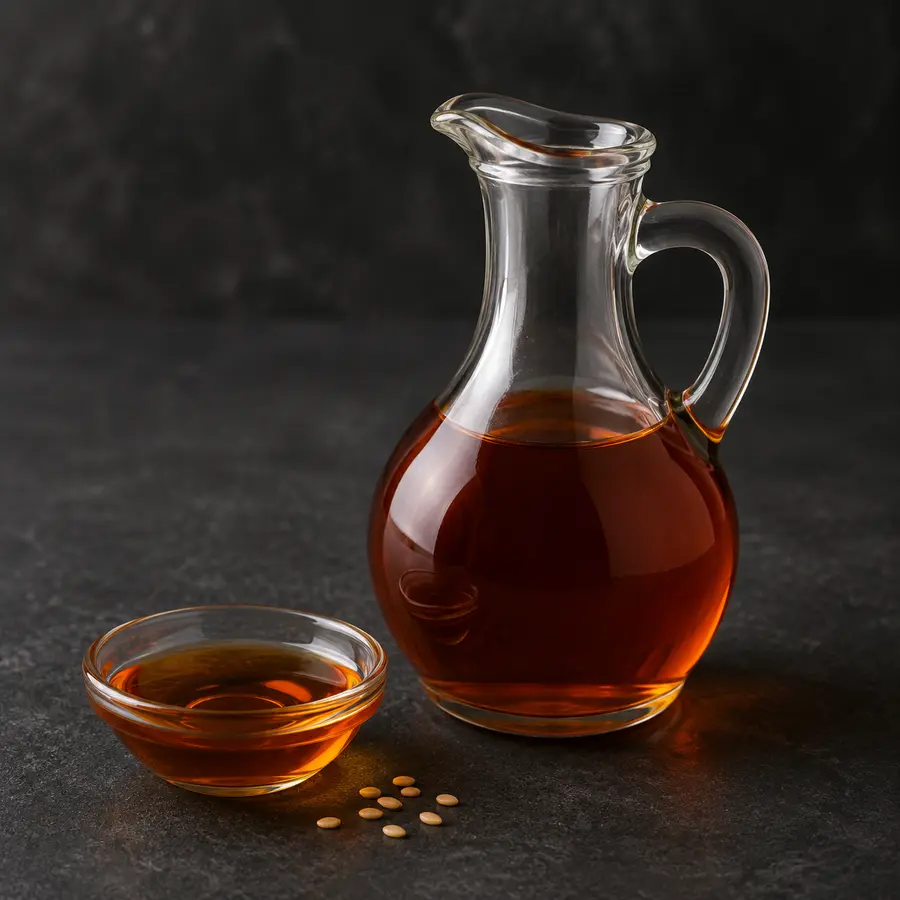
Ingredient at a glance: Toasted sesame oil is pressed from roasted sesame seed and is much darker and more aromatic than pale untoasted sesame oil.
Flavour, Aroma and Texture
It is intensely nutty, roasted and slightly sweet. A few drops can dominate; prolonged high heat removes aroma and may create bitterness.
How to Select It
Choose a sealed dark bottle with sesame as the clear ingredient and a recent date. Reject paint-like rancidity or stale burnt smell.
Professional Preparation
Measure with a spoon rather than pouring directly. Add near the end of cooking or blend into dressing. Use pale sesame oil, not toasted, when a neutral frying oil is intended.
Best Cooking Methods
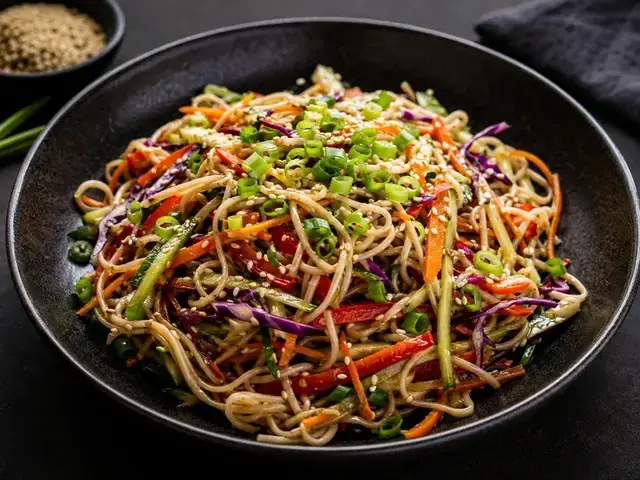
- Finish noodles, soup and stir-fry off heat.
- Whisk into soy, vinegar and chilli dressings.
- Blend into dipping sauce and marinade in controlled quantity.
Flavour Pairings
- Soy sauce, ginger, garlic and spring onion.
- Cucumber, spinach, cabbage and mushroom.
- Tofu, chicken, beef and tuna.
- Rice vinegar, chilli, honey and peanut.
Practical Substitutions
- Perilla oil for a different toasted seed aroma.
- Peanut oil plus toasted sesame seeds where allergens permit.
- Neutral oil with tahini for body, recognising the texture change.
Storage and Shelf Life
Store tightly closed, cool and dark; refrigeration can extend quality but may cloud the oil temporarily. Keep the pourer clean.
Season and Availability
A year-round processed condiment oil.
Nutrition and Dietary Context
Sesame oil is concentrated fat used in small amounts. Toasted and untoasted products have similar energy but different culinary roles.
Allergen and Food-Safety Notes
Sesame is a major allergen in many jurisdictions. Prevent cross-contact and label marinades and sauces clearly.
Zero-Waste Use
Use small older but sound quantities in cooked sauce before aroma fades, and recycle bottles. Do not pour waste oil into drains.
Common Mistakes to Avoid
- Using toasted oil as the main deep-frying medium.
- Pouring unmeasured oil into a delicate dish.
- Failing to identify sesame hidden in a sauce.
Chef’s Quality Check
A fresh drop should smell vividly roasted and nutty, with no waxy rancid finish; the dish should be perfumed, not oily.
This profile provides general culinary education. Product composition, allergens, storage life and safety requirements vary; check the label and follow local guidance.