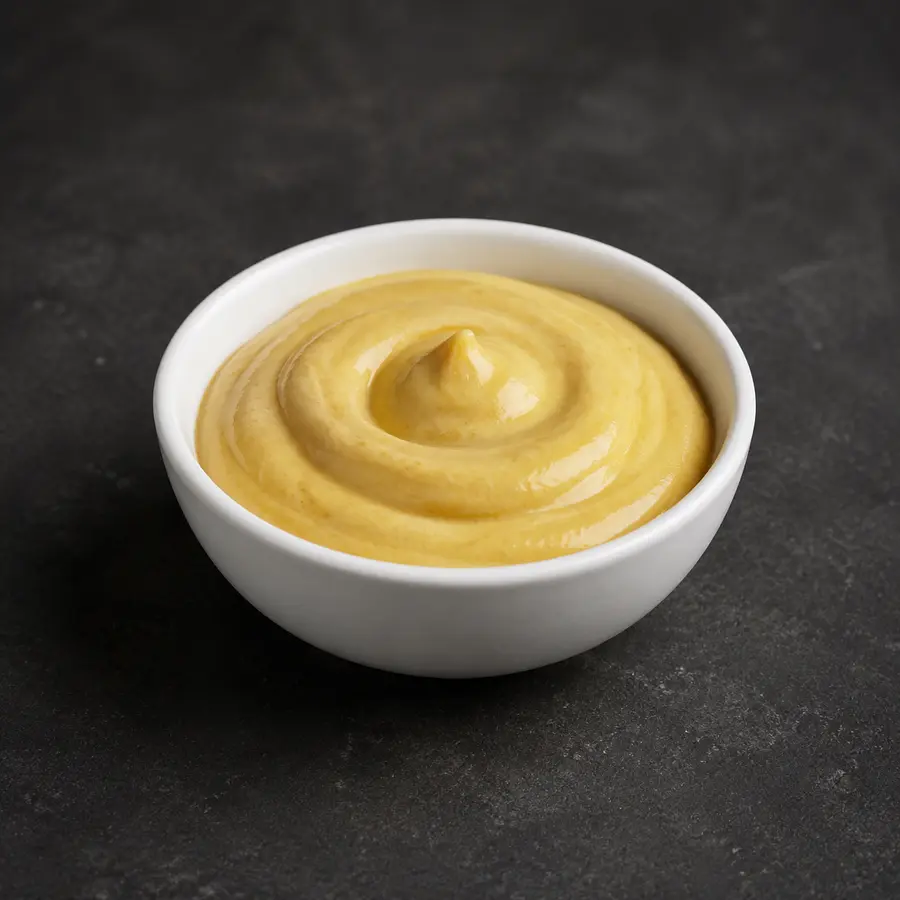
Ingredient at a glance: Dijon mustard is a smooth prepared mustard traditionally based on brown or black mustard seed, acid, water and salt.
Flavour, Aroma and Texture
It is sharp, tangy, savoury and moderately hot, with a smooth texture. Heat softens pungency, while cold use keeps it vivid.
How to Select It
Choose an intact jar with a clear ingredient and allergen label. Reject mould, gas, drying contamination or an abnormal fermented smell.
Professional Preparation
Use clean utensils, stir if slight separation is permitted by the label and measure before adding other salt or acid.
Best Cooking Methods
- Emulsify vinaigrette and mayonnaise-style sauces.
- Coat meat or vegetables before roasting.
- Finish cream sauce, stew or pan sauce for gentle pungency.
Flavour Pairings
- Honey, vinegar, lemon and olive oil.
- Chicken, pork, salmon and beef.
- Potato, cabbage, lentils and green beans.
- Tarragon, dill, garlic and black pepper.
Practical Substitutions
- Wholegrain mustard for texture and milder bursts.
- English mustard in smaller quantity for stronger heat.
- Prepared yellow mustard for sweeter, milder flavour.
Storage and Shelf Life
Refrigerate after opening when the label directs and keep the rim clean. Pungency fades with time even while the product remains safe.
Season and Availability
A year-round prepared condiment.
Nutrition and Dietary Context
Dijon mustard contributes sodium and is used in small portions. Formulas can contain wine, sulphites or sweeteners.
Allergen and Food-Safety Notes
Mustard is a major allergen in some jurisdictions and reactions can be severe. Check shared sauce bottles for cross-contact.
Zero-Waste Use
Use the last spoonful in jar dressing by shaking only after adding safe compatible ingredients and refrigerating for immediate use.
Common Mistakes to Avoid
- Adding extra salt before tasting mustard.
- Serving undeclared mustard in marinade or dressing.
- Expecting old open mustard to retain full heat.
Chef’s Quality Check
Dijon should be smooth, cleanly sharp and emulsify dressing without bitter dryness, mould or stale crust around the jar.
This profile provides general culinary education. Product composition, allergens, storage life and safety requirements vary; check the label and follow local guidance.