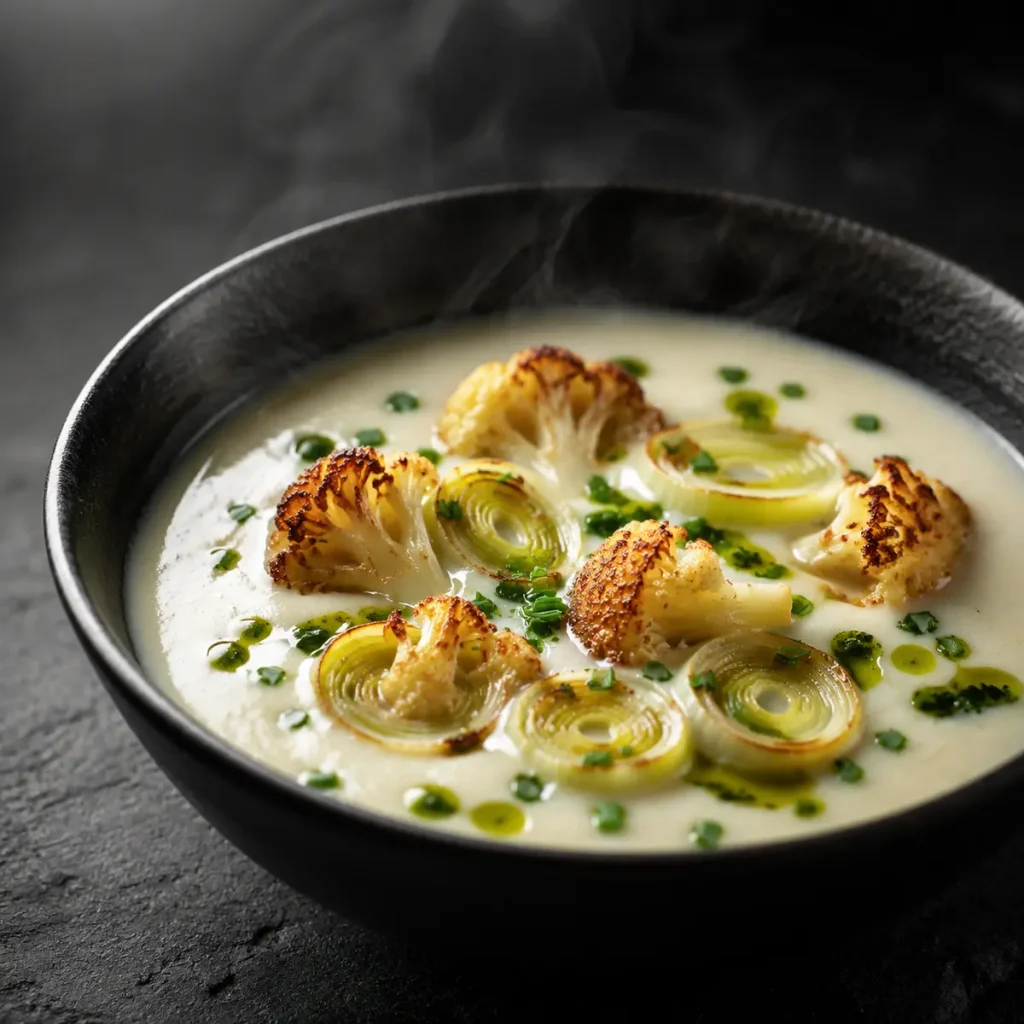
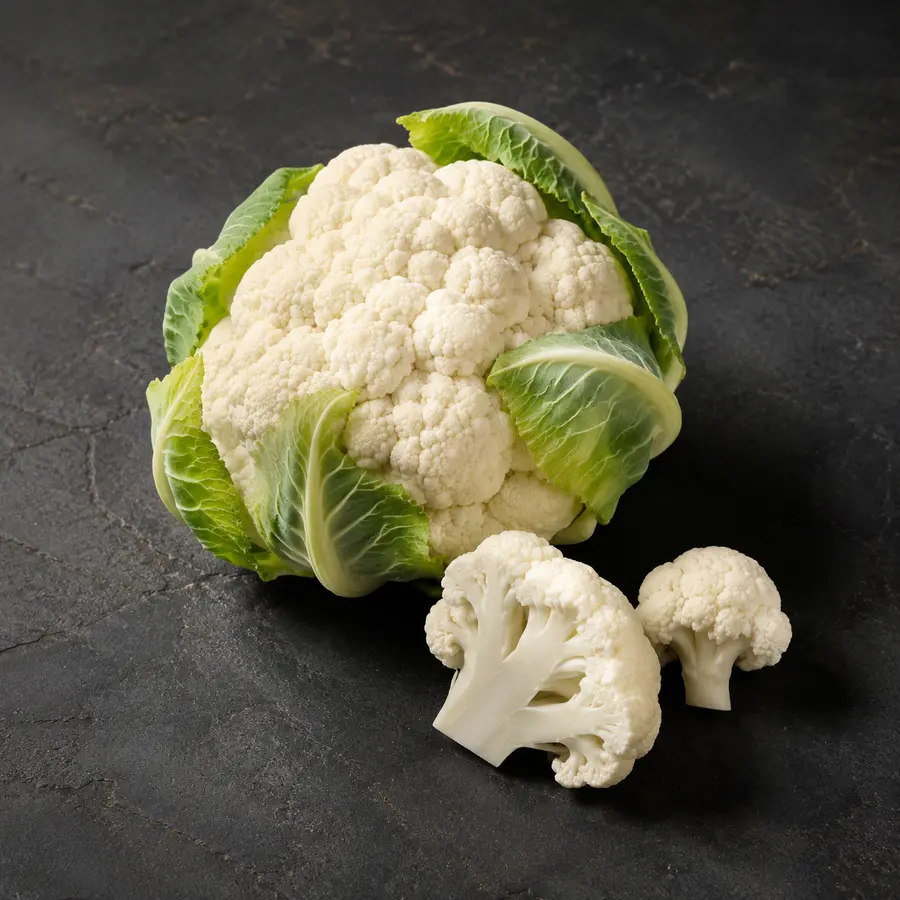
Ingredient at a glance: Cauliflower is a brassica with a compact flower head that can provide crisp texture, neutral body or nutty roasted flavour.
Flavour, Aroma and Texture
Raw cauliflower is firm, slightly peppery and vegetal. High-heat roasting adds nuttiness; prolonged boiling releases stronger sulphur aromas and creates waterlogged texture.
How to Select It
Choose a dense, creamy-white or variety-appropriate head with tight florets and fresh green leaves. Avoid spreading florets, brown wet spots, insects or a strong cabbage smell.
Professional Preparation
Remove leaves and thick core, then cut florets of equal size. Wash in clean cold water and drain thoroughly. Slice the tender core for stir-fries instead of discarding it.
Best Cooking Methods
- Roast dry florets at high heat with space for browning.
- Steam only until tender for puree or salad.
- Simmer briefly in curry after the sauce base is developed.
Flavour Pairings
- Cumin, turmeric, chilli and garam masala.
- Lemon, capers, mustard and vinegar.
- Cheese, yogurt, tahini and nuts.
- Garlic, parsley, coriander and mint.
Practical Substitutions
- Broccoli for greener, firmer florets.
- Romanesco for similar structure and a nuttier appearance.
- Celeriac for puree when floret texture is not required.
Storage and Shelf Life
Refrigerate unwashed and loosely protected from dehydration, stem side down when practical. Use cut florets promptly; surface browning and strong odour indicate quality loss.
Season and Availability
Generally best in cool seasons, although supply varies by region and protected cultivation.
Nutrition and Dietary Context
Cauliflower provides fibre, vitamin C and folate in variable amounts. Cauliflower rice changes form, not nutritional identity, and is not equivalent to grain for energy.
Allergen and Food-Safety Notes
Brassica allergy is uncommon but possible. Check florets carefully for insects and spoilage; discard slimy or deeply moulded sections.
Zero-Waste Use
Slice the core, roast small leaves until crisp and puree sound trimmings into soup. Stems can be pickled under a safe tested recipe.
Common Mistakes to Avoid
- Roasting wet florets that steam instead of colour.
- Boiling too long and creating sulphurous mush.
- Leaving florets under-seasoned because only the outer surface receives salt.
Chef’s Quality Check
Break a floret at the stem: it should be tender but defined, smell clean and show the intended browning without a wet grey centre.
This profile provides general culinary education. Product composition, allergens, storage life and safety requirements vary; check the label and follow local guidance.