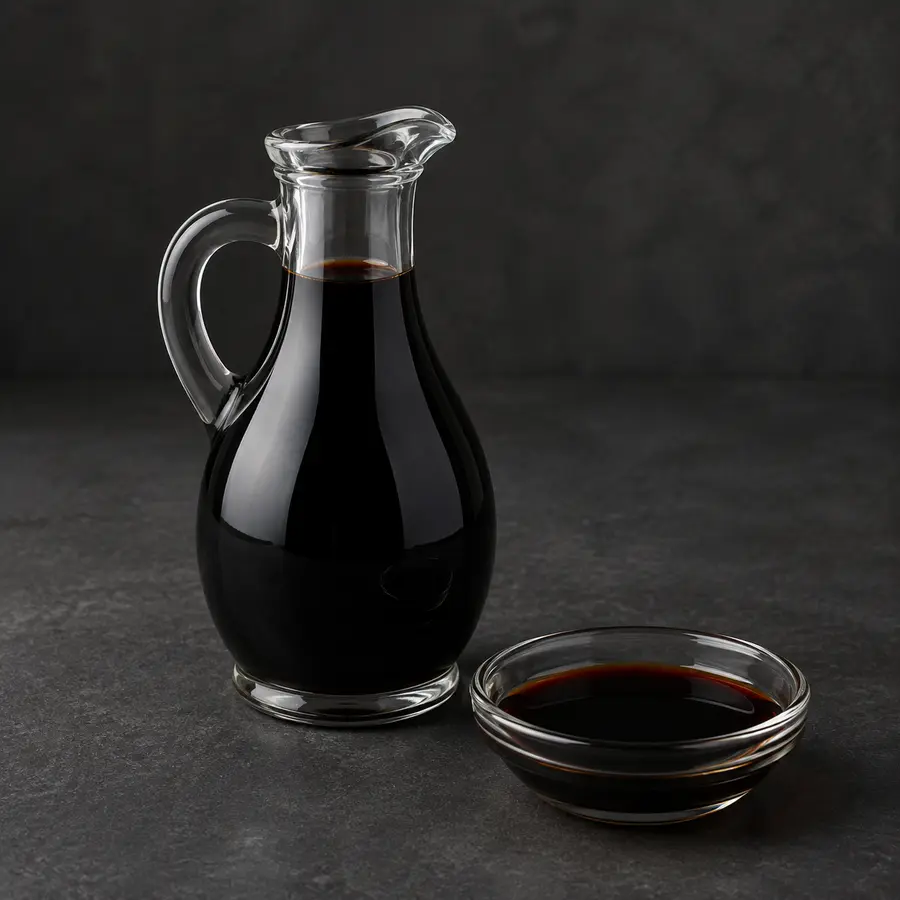
Ingredient at a glance: Soy sauce is a fermented salty condiment made from soybeans and often wheat; styles differ in colour, sweetness, ageing and intensity.
Flavour, Aroma and Texture
It is salty, savoury and fermented with roasted and sometimes fruity notes. Dark soy adds colour and mild sweetness; light styles season more directly.
How to Select It
Read the label for style, sodium, wheat, sweeteners and brewing method. Choose a sealed bottle with clean aroma and no mould around the closure.
Professional Preparation
Measure before adding because evaporation concentrates salt. Taste the complete sauce. Add dark soy for colour only in proportion to its stronger appearance.
Best Cooking Methods
- Season stir-fries, marinades and dipping sauces.
- Add to braises and soups for savoury depth.
- Combine with vinegar, ginger and sesame in dressing.
Flavour Pairings
- Ginger, garlic, chilli and spring onion.
- Sesame, rice vinegar, honey and lime.
- Tofu, mushroom, chicken and fish.
- Rice, noodles, cabbage and egg.
Practical Substitutions
- Tamari labelled gluten-free when medically required.
- Coconut aminos for sweeter lower-intensity seasoning.
- Miso diluted with water for fermented savouriness and different texture.
Storage and Shelf Life
Store unopened as labelled; refrigeration after opening best preserves aroma and colour, especially for low-sodium or traditionally brewed products.
Season and Availability
A year-round fermented pantry condiment.
Nutrition and Dietary Context
Soy sauce is high in sodium and normally used in small amounts. Reduced-sodium versions still contribute salt.
Allergen and Food-Safety Notes
Soy is a major allergen and many soy sauces contain wheat/gluten. Fermentation does not remove allergen; prevent cross-contact.
Zero-Waste Use
Use clean remaining sauce in marinades or braises before quality fades, and buy sizes that match use rather than keeping a large bottle open for years.
Common Mistakes to Avoid
- Treating light and dark soy as equal spoon-for-spoon colour agents.
- Adding salt before accounting for soy sauce reduction.
- Assuming every tamari is certified gluten-free.
Chef’s Quality Check
Soy sauce should smell fermented and savoury, pour cleanly and season without an excessive salty aftertaste or stale oxidised note.
This profile provides general culinary education. Product composition, allergens, storage life and safety requirements vary; check the label and follow local guidance.