
 Botanical
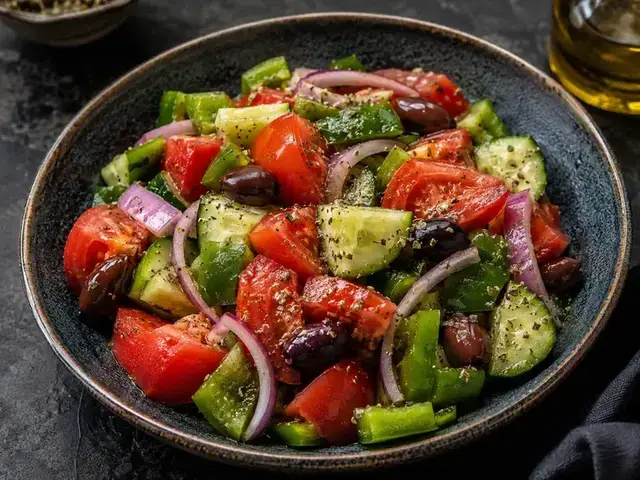
Vegan Greek Village Salad
This vegan village-style salad brings together ripe tomatoes, cucumber, green pepper, onion and olives with oregano dressing. Optional vegan feta adds a salty accent.…
Kolokasi is the Cypriot name for edible taro. This traditional-style recipe braises food-grade taro with tomato and celery until completely tender, finished with lemon and parsley.

Follow the measured ingredients, numbered method, substitutions, safety notes and cooking mode below.
Professional Chef Mode Mise en place: use correctly identified food-grade taro, prepare the celery and aromatics first, and keep hot stock ready. Wear gloves if taro handling irritates the skin and never taste it raw. Cut control: keep the taro pieces even so they finish together. Handle them gently once they begin to soften because the starchy exterior can break down and thicken the sauce quickly. Heat control: maintain a steady gentle simmer with enough liquid to prevent catching. Add hot stock in small amounts if the sauce thickens before the taro is fully tender. Quality control: every piece must be completely soft through the centre with no hard or chalky core. The tomato-celery sauce should coat the pieces without becoming gluey or scorched.
Kolokasi in tomato and celery sauce is a vegetable braise built around food-grade taro root. Properly cooked taro becomes tender and starchy, giving body to the sauce. Celery and lemon keep the tomato base from tasting heavy.
1. Read firstRead every step once before switching on the cooker.
2. MeasureWeigh and prepare all ingredients in the order listed.
3. Control heatLow means a gentle bubble, medium cooks steadily, and high is for quick browning.
4. Check donenessUse the texture, timing and safe-temperature checks written in the method.
Complete one numbered step before moving to the next. Keep the heat and timing exactly as written.
Taro size and variety change the cooking time. Thorough cooking is essential; the timer is only an estimate. Use food-grade root from a reliable supplier, not an unidentified ornamental plant.
Ingredient choices: Use correctly identified edible taro from a food supplier and follow any handling guidance. Taro must be thoroughly cooked and is not tasted raw. Wear gloves if handling irritates your skin, and keep the preparation separate from ready-to-eat ingredients.
Cooking control: Prepare even pieces and simmer them in the tomato-celery sauce until completely tender through the centre. Keep enough liquid to prevent the starchy base catching. Turn pieces gently rather than stirring until they break apart.
If something goes wrong: Firm or irritating-tasting taro is not a finished dish and should not be served. A sauce that thickens too early needs a little hot stock while the root continues cooking. Do not substitute an unidentified ornamental root.
Use food-grade taro, never an unidentified ornamental plant. Avoid tasting raw taro; peel carefully and cook thoroughly until soft throughout. Do not serve pieces with a hard or chalky centre.
Serve with celery and tomato sauce spooned around the taro pieces. Finish with parsley and taste before adding more lemon.
Refrigerate promptly in shallow covered containers at 4°C or below and use within 3 days. Reheat only the portion needed to at least 74°C throughout. Discard food left unrefrigerated for more than 2 hours, or 1 hour above 32°C.
Allergens: Celery; check vegetable stock for additional declared allergens
Botanical
This vegan village-style salad brings together ripe tomatoes, cucumber, green pepper, onion and olives with oregano dressing. Optional vegan feta adds a salty accent.…
 Botanical
Aloo tama with black-eyed peas combines potato, fully cooked fermented bamboo shoots and tender beans in a tangy Nepali-style broth. Fermented bamboo gives the…
 Botanical
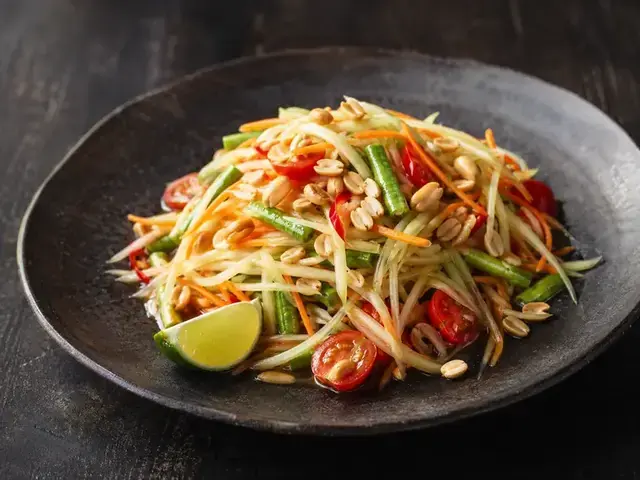
Shredded green papaya, beans, tomatoes, peanuts and a lime-chilli dressing create a crisp vegan Thai salad with sweet, sour, salty and spicy balance.
No reviews yet. Be the first to rate this recipe.